When the temperature won't drop at night, sleep is the first thing to go. You don't necessarily need a colder AC bill — you need to move heat away from your body and let air do its job. Below is the honest order of operations: cool the room first, then fix the fabrics touching your skin, then add targeted cooling where you actually feel hot. No gadgets required to start.
(General comfort and cooling information, not medical advice. If you feel unwell in the heat, talk to a healthcare professional.)
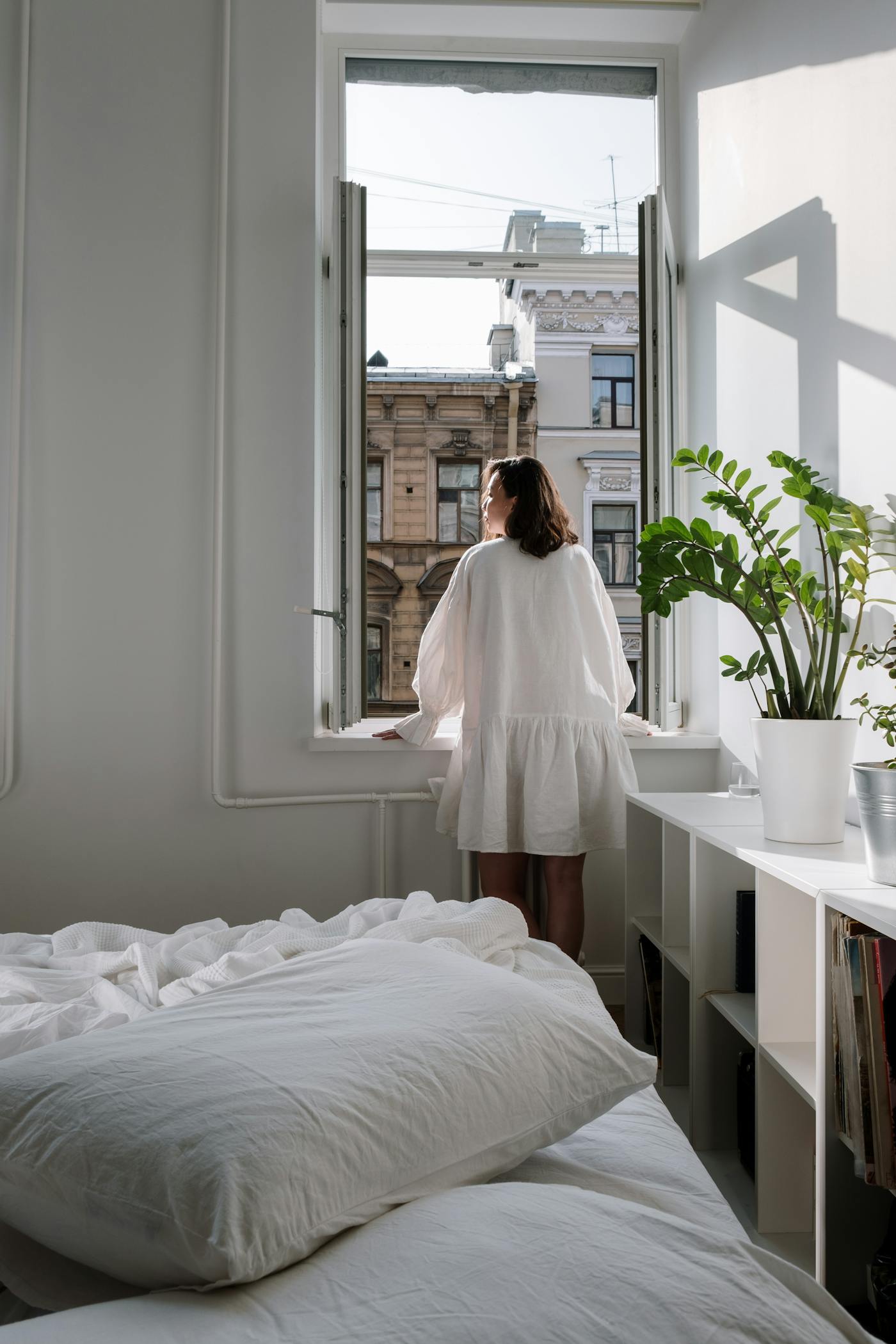
1. Cool the room before bed
Most of the fight is won before you lie down. A room that's been baking all afternoon will keep radiating heat for hours, so the goal is to stop heat coming in and start moving it out:
- Block the afternoon sun. Close blinds or curtains on the sun-facing windows during the hottest part of the day so the room never heats up in the first place.
- Cross-ventilate after sundown. Once the outside air is cooler than the inside, open windows on opposite sides of your home to pull a breeze through. A fan in one window pushing warm air out helps it along.
- Try the fan-over-ice trick. Set a shallow bowl of ice or a frozen water bottle in front of a fan. As the air passes over it, the breeze that reaches you feels noticeably cooler.
- Chill a bottle for the bed. A water bottle filled and left in the freezer can be tucked near your feet — cooling your feet and ankles helps the rest of you feel cooler too.
If you want the full version of this setup, our guide on how to stop overheating at night walks through ideal room temperature and airflow in more detail. Or just see everything built for cool sleep.
2. Fix the fabrics touching you
Once the room is handled, the next layer is literally the layer against your skin. Heavy, dense fabrics trap warm air and hold moisture against you; light, breathable, moisture-wicking fabrics let heat and humidity move away so you stay drier and cooler.
- Sheets and bedding. Reach for breathable, moisture-wicking weaves that let air pass through instead of dense fabrics that hold heat. A silk pillowcase is a cool-to-the-touch upgrade for the spot your head rests all night.
- Sleepwear. Loose, lightweight, breathable sleepwear lets air circulate around you rather than clinging when you warm up.
For the specifics on what to put on the bed and on yourself, see the best cooling bedding and what to wear to bed to stay cool and dry.
3. Cool your head and pressure points
Your head and neck are where you shed heat fastest, so they're worth cooling directly. A regular pillow stores the heat from your head and hands it back; a cooling pillow keeps the surface regulating so there's no warm side to flip to.
- A cooling pillow. The Cool Pillow uses a phase-change cover that stays cool through the night and a breathable build that lets heat escape instead of trapping it against your face.
- A chilled eye mask. Keep a Cool Eye Mask in the freezer and reach for it when the room feels stifling — a fast, cool reset for your face and the back of your neck.
4. The surface under you
If your mattress sleeps hot, it can quietly undo everything above it by holding warm air right under your body all night. The fix is to put something breathable between you and a heat-trapping surface so air can move and warmth can escape rather than pool beneath you. A cooling topper or a breathable, airy layer over a hot mattress lets the surface stay cooler to the touch.
If overheating starts from the bed up, our cool-sleep setup guide covers breathable bedding layers, and you can browse the full range to build the rest of a cool bed around it.
5. On-the-go heat
Heat waves don't stay home. Travel, a stuffy hotel room, or a power outage that knocks out the AC are all moments when you want cooling you can carry. A portable, wearable cooler keeps you comfortable when you can't control the room around you.
- Wearable cooling. The Nightshift Wearable is a rechargeable neck cooler that runs on its own charge — useful for travel, a warm room, or when the power's out and the fan won't run.
Not sure where to start?
If you'd rather buy one thing and see what a difference it makes, our cooling buyer's guide lays the pieces out by the job each one does, so you can start with whichever problem is keeping you up — the room, the fabrics, your head, or the bed itself.
Browse everything built for cool sleep →
Related: How to stop overheating at night · The best cooling bedding. Want $10 off your first order? Join the newsletter.